
How AI Could Have Transformed the Olympic Boycott Case in DeFrantz v. USOC
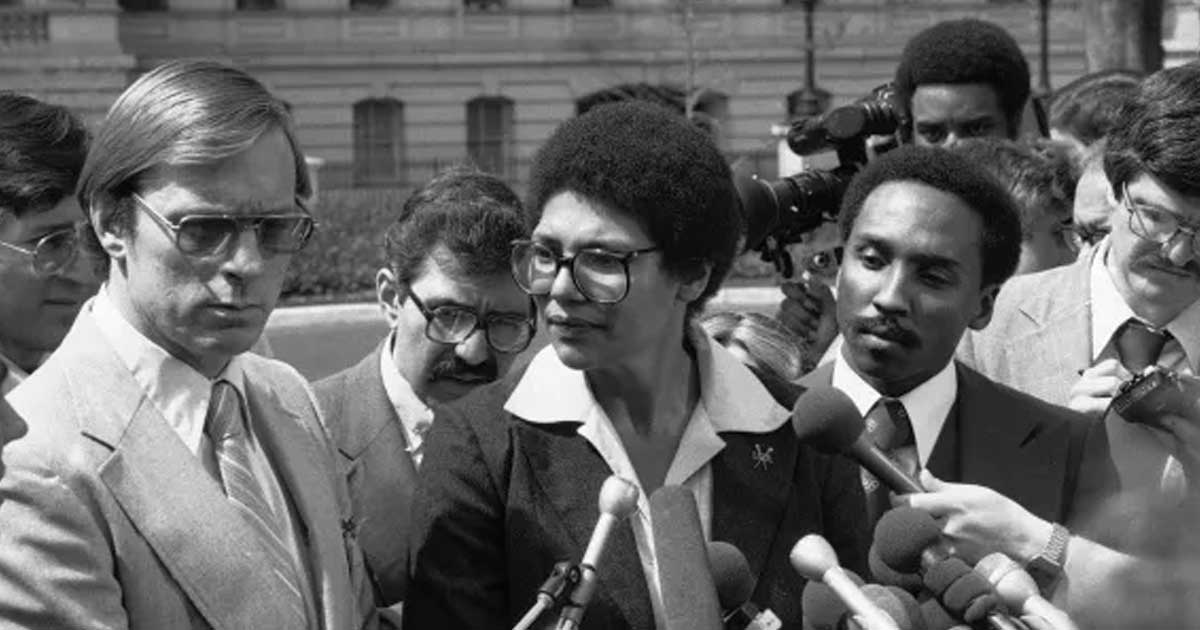
Few moments in Olympic history have generated as much controversy as the United States’ decision to boycott the 1980 Moscow Games. When the United States Olympic Committee (USOC) ultimately chose not to send athletes, a group led by Anita DeFrantz challenged that decision in court. Their argument centered on a fundamental governance question: who ultimately controls participation decisions, and how are those decisions documented, communicated, and justified?
In DeFrantz v. USOC, the courts sided with the USOC, holding that the governing statute did not obligate the organization to send a team to the Games. But the case raised deeper questions about fairness, organizational governance, decision-making authority, and how athlete interests are weighed against broader institutional and political considerations.
What makes this case especially compelling for modern legal and compliance teams is that it unfolded in a pre-digital era, when records related to governance, policy interpretation, and internal deliberation were fragmented across physical files, independent committees, and manual note-taking systems. It was an environment where building a complete and accurate picture required persistence, patience, and extraordinary operational effort.
If a case like DeFrantz arose today, AI, GenAI, and modern eDiscovery would dramatically reshape how service providers support legal teams in gathering evidence, analyzing governance rules, and evaluating decision-making fairness. This blog examines how.
1. What Governance and Discovery Operations Looked Like in 1979 and 1980
The DeFrantz case emerged from a complex ecosystem of athletic associations, federal entities, and sports governing bodies. From an operational standpoint, there was no centralized system for managing governance records or institutional communications. Each organization maintained its own records, often in inconsistent formats.
A. Manual Governance Review
To understand the scope of the USOC’s authority, legal teams needed to review:
- Bylaws
- Governance documents
- Policy manuals
- Meeting minutes
- Historical athlete-eligibility and participation decisions
These materials were stored in filing cabinets and archives across multiple organizations. Assembling a coherent view of authority and precedent required physically gathering documents, creating binders, and manually cross-referencing language.
B. Delayed and Fragmented Communication
Because coordination relied on:
- Postal mail
- Phone calls
- In-person meetings
- Typed or handwritten transcripts
Requests for information moved slowly. Version control was limited, institutional memory lived in people rather than systems, and alignment across stakeholders required repeated manual follow-up.
C. Limited Ability to Analyze Patterns
Legal teams were forced to rely on manual comparison to answer questions such as:
- Has the organization made similar decisions before?
- Were athletes treated consistently across Olympic cycles?
- Did internal discussions align with public explanations?
Without analytics or centralized review platforms, identifying trends, inconsistencies, or governance patterns was extremely difficult.
D. Fragmented Discovery
Each governing body retained its own records. There was no single repository for:
- Athlete grievances
- Internal memoranda
- Correspondence with government officials
- Governance decisions spanning multiple years
A significant portion of the effort went into assembling the factual record itself, before any meaningful analysis could begin.
2. How AI, GenAI, and Modern eDiscovery Would Transform the Case Today
If a dispute like DeFrantz emerged in 2025 or 2026, the most significant change would not be the legal framework, but the operational workflows supporting governance review and discovery.
Modern AI-enabled discovery allows service providers to help legal and compliance teams move faster, with greater transparency and consistency.
A. Rapid Collection of Governance Records and Communications
Today’s platforms allow teams to:
- Collect emails, documents, and communications across multiple organizations
- Centralize years or decades of governance history into a single environment
- Organize records by topic, such as boycott deliberations, authority definitions, or athlete feedback
What once took months of coordination can now be executed in days through defensible, repeatable collection workflows.
B. GenAI-Assisted Policy and Governance Analysis
GenAI can support governance review by:
- Summarizing bylaws, policies, and governing rules
- Highlighting differences across policy versions and time periods
- Surfacing historical interpretations of authority
- Generating structured summaries for attorney and compliance review
These tools accelerate understanding, while human experts validate conclusions and apply judgment.
C. Pattern Detection and Consistency Review
Advanced analytics enable teams to identify:
- Recurring athlete concerns or grievances
- Patterns in governance decision-making
- Gaps between internal deliberations and external communications
- Shifts in policy interpretation over time
This kind of pattern analysis supports more informed assessments of consistency, transparency, and fairness.
D. Accelerated Discovery and Review Workflows
Using tools like RelativityOne and aiR:
- Relevant documents are prioritized through analytics
- Communications are clustered by subject matter
- Privilege indicators are surfaced earlier and more consistently
- Deposition and witness materials are summarized efficiently
The burden of manual, linear review is dramatically reduced, allowing teams to focus on analysis rather than logistics.
E. Automated Timeline and Decision Mapping
AI can extract dates, events, and decision points across large document sets to produce:
- Clear, defensible timelines
- Visual maps of communication flows
- Alignment between governance decisions and athlete impact
These outputs help legal and compliance teams understand not just what happened, but how decisions evolved over time.
3. Then vs. Now: Operational Impact of Modern Discovery
These comparisons are illustrative, but they reflect a consistent shift: modern discovery workflows reduce manual effort, improve transparency, and support more defensible governance analysis.
4. Why This Case Matters for Modern Legal, Governance, and Compliance Teams
Organizations today face increasing scrutiny around decision-making authority, fairness, and accountability. The DeFrantz case underscores the importance of:
- Clearly defined authority boundaries
- Consistent application of governing rules
- Documented reasoning behind high-impact decisions
- Transparent communication with stakeholders
Modern discovery technology strengthens each of these areas by making information easier to collect, analyze, and audit.
When teams can quickly examine policies, compare historical decisions, and visualize communication patterns, they are better equipped to act with confidence and integrity.
5. Where Page One Fits In
Page One supports governance, compliance, and high-stakes matters by combining modern eDiscovery technology with operational expertise. With tools like aiR for Case Strategy, we help teams:
- Gain rapid visibility into complex governance records
- Identify patterns and inconsistencies early
- Maintain defensible, auditable workflows
- Reduce friction across discovery and review
Our role is not to decide policy, but to ensure that the information underlying those decisions is handled with clarity, accuracy, and transparency.
Conclusion
The DeFrantz v. USOC boycott case remains a defining moment in Olympic governance history. If it were litigated today, AI and modern eDiscovery would dramatically change how the work is executed, accelerating timelines while improving insight and transparency.
For legal, governance, and compliance teams, the evolution of discovery technology has transformed how organizations assess authority, document reasoning, and demonstrate fairness. With the right tools and experienced service providers, even the most complex governance disputes can be approached with clarity and confidence.